
Difference Between Panic Attack and Heart Attack Symptoms Explained

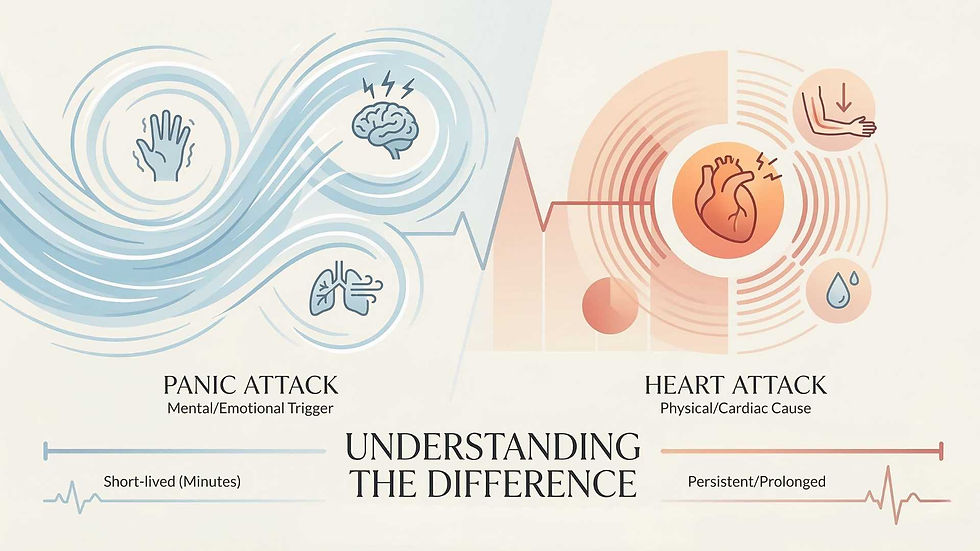
Many people experience sudden chest pain, a racing heartbeat, or shortness of breath and immediately worry about a heart attack. However, these sensations can also occur during a panic attack. Understanding the difference between panic attack and heart attack symptoms can help you respond appropriately and seek the right care. Both conditions can feel frightening, but they stem from very different causes. Distinguishing them correctly can prevent unnecessary panic while ensuring a true cardiac emergency is not overlooked.
What Is the Difference Between Panic Attack and Heart Attack?
A heart attack, known medically as a myocardial infarction, occurs when blood flow to part of the heart muscle is blocked, depriving the tissue of oxygen. Panic attacks, on the other hand, result from an intense surge of fear or anxiety when the body’s stress response goes into overdrive. The difference between panic attack and heart attack lies in both the physical cause and the pattern of symptoms.
Heart attack symptoms often develop gradually and persist or worsen. Panic attack symptoms usually peak within minutes and then fade. Yet because both can cause chest discomfort, tachycardia (a rapid heartbeat), and shortness of breath, many people have difficulty telling them apart.
Comparing Physical Symptoms of Panic Attack vs. Heart Attack
Heart attack and panic attack symptoms overlap, but the characteristics of pain, duration, and triggers give important clues.
Nature of the Chest Pain
Heart attack pain is often described as heavy pressure, squeezing, fullness, or a tight band across the chest. It can feel as if something is pressing or sitting on the chest. Panic attack pain is usually sharp, stabbing, or localized. Many describe it as fleeting or changing location within the chest.
Radiation and Location of Pain
During a heart attack, pain may radiate to the jaw, neck, shoulders, arms, or even the upper back. For many women, the discomfort can appear in the lower chest, stomach, or back instead of the left side of the chest. Panic attack pain is typically confined to the chest and less likely to spread elsewhere.
Duration and Progression
Panic attack symptoms typically peak within 10 minutes and resolve within an hour. Heart attack symptoms tend to persist or come in waves and rarely disappear completely. Continued pain, especially if it lasts more than 10 to 15 minutes, requires immediate medical evaluation.
Other Common Symptoms
Heart attack symptoms may include nausea, lightheadedness, cold sweating, and extreme fatigue. These signs are often absent in a panic attack. In contrast, people experiencing panic attack symptoms report trembling, tingling in the hands or feet, a sense of unreality, or an intense fear of losing control.

Causes and Triggers
Triggers for a Heart Attack
A heart attack commonly results from coronary artery blockages that restrict blood flow. Physical exertion, dehydration, smoking, or underlying conditions such as high blood pressure can raise risk levels. Heart attacks may also occur after emotional stress, but physical damage to the artery is the main cause.
Triggers for a Panic Attack
A panic attack occurs when the brain perceives danger and releases stress hormones such as adrenaline and cortisol. These increase heart rate, blood pressure, and respiration—physiological changes that mimic cardiac distress. Panic attacks can strike suddenly after emotional stress, worry, or exposure to anxiety triggers, and they can also appear without obvious cause.
Gender Differences in Heart Attack Symptoms
Heart attack symptoms in women can differ from those experienced by men. According to the American Heart Association, women may experience mild pain in the jaw, neck, or upper back instead of severe chest pressure. Some also feel shortness of breath, nausea, or exhaustion without intense pain. Because these atypical symptoms can resemble anxiety symptoms, women are at greater risk of overlooking a cardiac emergency. Any chest discomfort that accompanies these sensations should be evaluated promptly to rule out a heart attack.
When Panic Attacks Affect Heart Health
While panic attacks themselves do not directly cause heart disease, chronic anxiety can strain the cardiovascular system. Over time, repeated surges in stress hormones may elevate blood pressure and heart rate, contributing to inflammation and potential cardiac issues. Individuals with existing heart disease should discuss anxiety management with their doctor, since emotional distress can trigger or worsen symptoms.
How to Tell If Chest Pain Is Cardiac or Anxiety Related
Because panic and heart attack symptoms may appear similar, use these key distinctions to guide your initial response:
Trigger: Heart attacks are typically linked to exertion or underlying heart disease. Panic attacks often occur during stress or fear.
Pain character: Heart attack pain feels heavy or squeezing; panic attack pain feels sharp or stabbing.
Location: Heart attack pain can spread to the arm, neck, jaw, or back. Panic attack pain stays mostly in the chest.
Duration: Panic attacks peak quickly and subside within an hour. Heart attack pain persists or recurs.
Associated symptoms: Nausea, sweating, and fainting favor a cardiac event; trembling and fear suggest a panic episode.
If any doubt remains, it is always safest to treat chest pain as a potential heart attack and seek emergency care. Emergency physicians can perform an electrocardiogram (ECG), blood tests, and imaging to confirm or rule out a cardiac cause.
When to Seek Emergency Care
Seek urgent medical attention if you experience chest pain that lasts more than a few minutes, radiates into the arm or jaw, or occurs with lightheadedness or shortness of breath. Even if you think it might be anxiety, it is better to have a professional assessment. A heart attack is a medical emergency that can be life-threatening. Quick action saves heart muscle and lives.
Managing Anxiety and Preventing Panic Attacks
If a medical evaluation shows the heart is healthy, managing stress and anxiety can reduce panic attack frequency and severity. Effective steps include:
Cognitive behavioral therapy (CBT): This structured form of therapy helps retrain the brain’s response to bodily sensations and fear triggers. Exposure-based methods allow individuals to experience mild versions of feared symptoms, lowering overall anxiety.
Breathing exercises: Slow, controlled breathing can calm the stress response and prevent hyperventilation.
Mindful meditation: Regular mindfulness practice reduces stress hormones and helps control racing thoughts.
Physical activity: Walking, yoga, or light exercise improves mood and cardiovascular health.
Limiting stimulants: Reducing caffeine and nicotine can lower the likelihood of triggering panic or jittery sensations.
The Importance of Preventive Cardiology and Emotional Wellness
Both cardiac health and emotional well-being are closely linked. Maintaining healthy blood pressure, cholesterol, and body weight reduces the risk of cardiac events. Meanwhile, addressing anxiety through therapy, medication, or stress‑management techniques improves overall quality of life. A comprehensive approach that includes both heart and mental health care is ideal for long‑term prevention.
Key Takeaways
Panic attacks and heart attacks can share chest pain and shortness of breath but differ in cause, duration, and associated symptoms.
Heart attack pain typically feels heavy and radiates, while panic attack pain feels sharp and localized.
Women’s heart attack symptoms can be subtler, sometimes mistaken for anxiety.
Always seek emergency care if chest pain persists or you are uncertain about the cause.
Managing stress, practicing mindfulness, and engaging in regular medical check‑ups support both mental and heart health.
Conclusion
Distinguishing the difference between panic attack and heart attack symptoms is crucial for timely and appropriate care. A panic attack results from an overactive stress response, while a heart attack stems from blocked blood flow to the heart muscle. Because the two can mimic each other, it is always safest to get checked by a healthcare professional. Understanding your body’s signals, managing anxiety symptoms, and maintaining heart health through preventive care can help you stay safe and confident in managing both physical and emotional well‑being.


Comments